Remote Work, Meaningless Jobs, and the Case for Living Intentionally
Data show remote work has driven a large rise in isolation and worsening mental health since 2019, but the deeper issue is atomized, meaning-poor work. Hybrid fixes help, yet building purposeful work and intentional communities offers a stronger remedy.

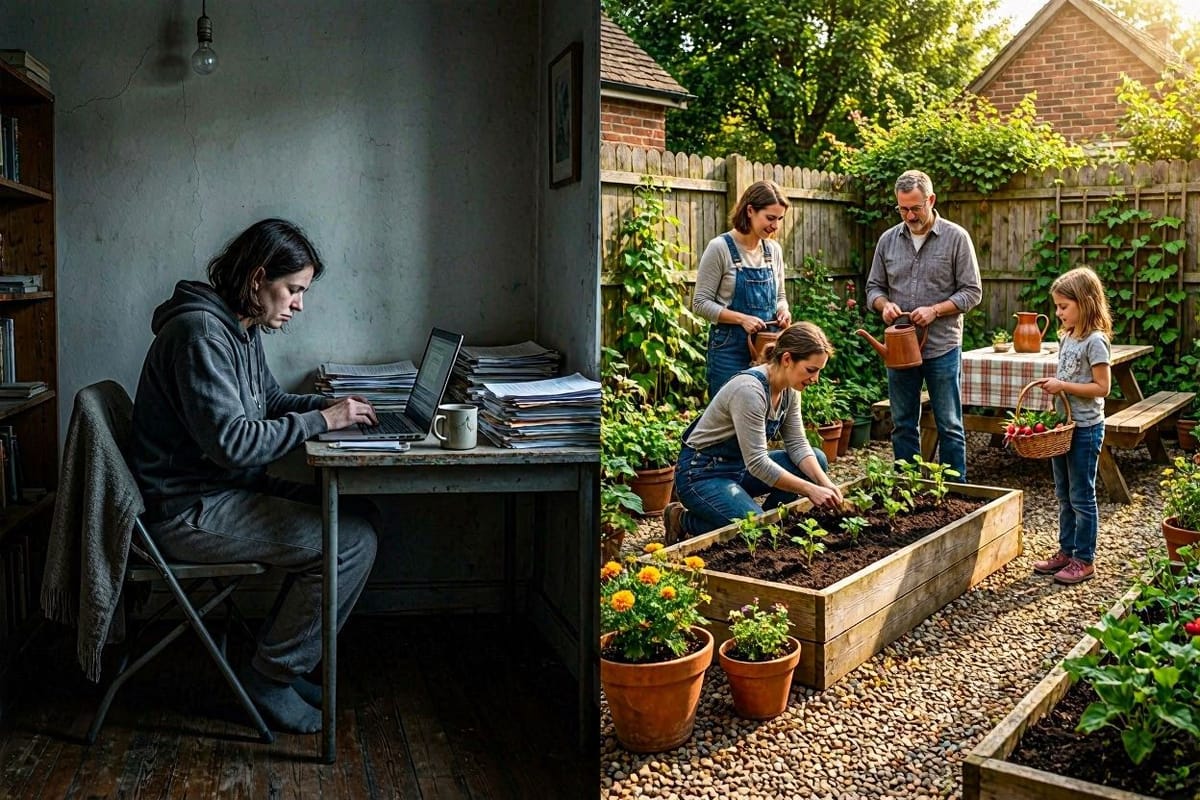
Harrington and Emanuel used large survey datasets to argue that the growth of remote work since 2019 has substantially increased social isolation and mental-health distress, accounting for about one-third of the decline in U.S. mental well-being from 2011–2024. Remote-capable workers are more likely to spend workdays alone, get less feedback, and have fewer incidental social contacts, with especially large harms for people living alone.
They are not wrong, but it's another example of not seeing the forest for the trees: the authors are so enmeshed in the system that they can't recognize—or at least they didn't acknowledge in their article—the deeper structural failure of modern society that's at the root of the problem.
The core problem of isolation is not because of remote work, but rather it's the nature of the labor-for-wage economy itself, itself an inevitable by-product of our cultural drift from community towards atomistic individualism. We don't want to work remotely just to avoid our commutes—that might be some of it—but because most of us devalue our work relationships and our work isn't meaningful to us. Most of people work for the paycheck—very few are fortunate to have their ideal job—so when faced with the opportunity to regain some time for oneself, whether by eliminating the commute or sneaking in personal time between meetings and actual heads-down work, most people who can work remotely will choose to do so.
The authors recommend intentional hybrid practices—both individual initiatives (lunches, one-on-ones) and employer-led changes (rewarding connective work, creating communal spaces)—to preserve the social benefits of work without discarding flexibility. But here's an even better idea: how about we do work that's actually meaningful to us, and with people we actually care about and love?
That's easy to do when you live in an intentional community, and that's exactly what I'm building. To understand in more detail how it's possible to create a more easeful, more connected, more fulfilling life—let alone work environment— check out my previous post:
 Nathan Buckley
Or watch the video at njb.fyi/why